

Soulful Selling & Being a Priestess of Your Art
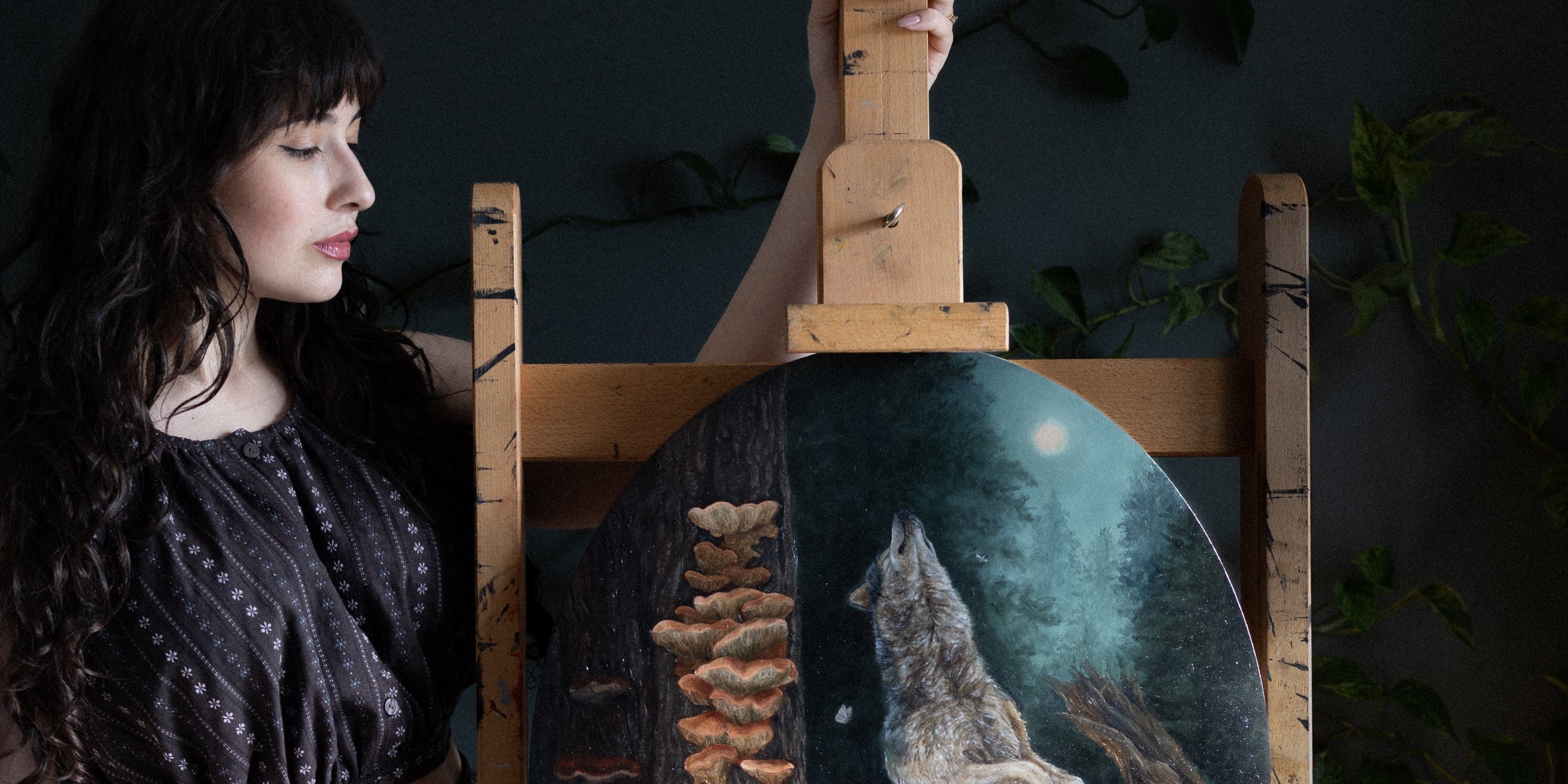
The first painting I ever sold overseas was made on a large, round panel, and featured a waning moon. I was a financially strained grad student and studio instructor at the time, and for years had been coveting the work of a Montreal-based fine jewelry brand.
When I first discovered them, one item in particular siren-songed my way: a hand-carved, mother of pearl pendant of a sleeping moon. It made no logical sense, but I decided to put most of the sale’s proceeds into purchasing it.
I didn’t do this before ensuring my necessities were covered, but still, it wasn't a choice I made lightly.
I now wear the pendant daily. It acts as ritual adornment, a reminder of when someone first saw it fit to collect my work, because it called to them the same way the pendant had called to me. It sits at my throat, shining iridescent light on the value of beauty.
Through that exchange, I understood what the priestess knows instinctively: to embody your art’s value, you must hold desire as sacred.
Nobody needs artwork, strictly speaking—but we long for it.
That desire is valuable.
But desire is a slippery thing. It exists as a vast, timeless tide. When we try to grasp it, it leaks through our fingers, returning back to the sea. That ephemerality is its allure. Sea water ladled into a jar, then labeled and sold, doesn’t carry the same mystique. It moves from the realm of the sacred into the mundane.
So many creatives are raised with the insistence that the arts are inherently impractical. Because of this, they have a hard time honouring the real, financial value of their labour, despite the fact that creative industries are highly profitable on a global scale.
This sentiment is amplified as the world grows more chaotic. Hardworking, polite society deems creativity vain or insubstantial—yet keeps consuming its fruits. This makes attempts to sell our art feel tasteless, even as it’s ever more hungered for.
For reassurance, I look to Venus, a patron of the arts, beauty, and aesthetics. There is a reason that this goddess has enticed over thousands of years; Botticcelli’s Birth of Venus continues to be one of the world’s most iconic paintings. Deep in the human soul there is a longing for the beautiful and the transcendent.
High Priestess vs. Hierophant: Tarot Sales Archetypes
I used to feel unqualified to share about marketing. I have no desire to run some kind of art empire, and beyond a painful stint with a god-awful retail manager, I don’t have formal sales training. What I do have, however, is personal experience selling my work to collectors.
As my career has progressed, I’ve come to understand that selling can have nothing to do with traditional forms of persuasion and everything to do with personal integrity. You have to stand firmly in the worth of your art and let your conviction speak for itself. For this, the archetype of high priestess becomes an invaluable consort.
To begin exploring the High Priestess, it helps to first look to her masculine counterpart in the Tarot: the Hierophant.
The Hierophant is externally focused. He comes from a long line of tradition, and abides by the laws of his position as a religious leader. He takes a lofty, yet vocal and authoritative stance, sermonizing on the virtues of an undertaking or the follies of not pursuing a chosen path.
For so long, I couldn’t entertain the thought of selling my art without picturing the shadow side of the Hierophant—someone telling me that my existence is lacking, and that they’re here to bless me with a saving grace.
After all, that’s the kind of selling I saw online. Every social platform contained a barrage of ads insisting that my life would be forever changed if I just downloaded this dieting app or joined this creative coach’s membership.
The messaging was fanatical, and I couldn’t stomach the thought of embodying that same energy when it came to offering my own work to the world. Luckily for us, as artists, it’s not our job to save anyone. Instead we help them connect with desire and dream.
That’s where the High Priestess comes in.
Unlike the Hierophant, the High Priestess is inward facing, moving from intuition. She embodies her devotion to the divine through her own spiritual practice. Rather than sermonizing, she leads by example.
Both archetypes are important and we can, of course, approach our sales messaging as fluidly as we’d like, so long as beneath the soft underbelly a backbone of strategy remains. Tailoring how much of each archetype we express based on a deep consideration of what feels most resonant for us, I find to be wise counsel.
Personally, I’m a proponent of the priestess’ path for creatives, not just because I don’t fit the Hierophant archetype so often lauded online, but because there is a softness and a sacredness inherent to the priestess which feels more like home to me.
When you become a priestess of your art, there is no pulpit to shout from, no sales script to follow. Selling becomes a form of ritual, an oath of devotion toward your work.
Embodying Your Art’s Value
In traditional tarot decks the High Priestess is always seated, waiting. It would be easy to glance at the imagery and dismiss her as passive. You would be mistaken. She may not be proselytizing to a crowd like the Hierophant is, but she is working. The work is simply internal, energetic.
She waits for the curious to approach and when they do, reveals what she knows. The rest is up to them.
As artists and priestesses of our work, it’s important that we keep half an ear on the waves of our intuition. Otherwise, we’ll find ourselves dirtied and landlocked by what most deem “common sense.”
For example, following-up on sales inquiries has never worked for me. This is despite popular advice that it’s standard procedure. I realized that checking back in with potential collectors operates on the assumption that my work is an afterthought.
Someone truly interested in your work will reach out of their own accord. I’ve had collectors come out of the woodwork as far as three years after making first contact.
As a collector of beautiful things myself, I’ve also spent years saving for handmade items before feeling ready to make the purchase. Had the artist or artisan followed-up with me, I would have felt pressured. The thing I was saving for would be nudged away from its pedestalized spot as the object of my desire, and into the territory of social obligation.
The exchanges you have with your own collectors may vary. The important thing is to pay attention to how you feel in your attempts, and how those feelings correspond to a specific result. I’ve experimented enough to know that if I feel like a nuisance, I’m likely to come across as one.
When figuring out what sales approaches would apply to your practice, a little empathy goes a long way. That’s why it’s so helpful for artists to have purchased original artwork or handmade items themselves, even if the process of doing so is slow.
The value of the object that you’re saving for doesn’t have to be equivalent to your own artwork, of course. You don’t have to be your own target demographic. But it should feel significant. If you’re not willing to invest in your desires, even modestly, then how can you expect your collectors to invest in theirs?
These days, I see soulful selling as the intersection of two threads of faith. The artist has faith that their work will be seen and appreciated. The collector has faith that the object they give their life force to acquire (in the form of their money, and therefore time) will be worth the sacrifice.
The collector’s belief nourishes the artist’s devotion, creating a cycle of reverence that renews both. What is offered in love returns tenfold—if not as money, then as meaning.
To be a priestess of your art means you live your life in service of beauty and of your work. You know that investing in the beautiful goes beyond simple decoration. It’s a declaration of devotion, an act of worship.